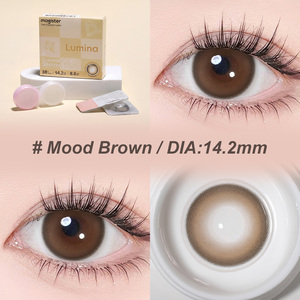
Factory Direct Offerings
Featured Private Label Lenses & Packaging Solutions
High-precision cosmetic hydrogel contact lenses, custom printed packaging, and specialized care accessories engineered for international distributors and optical brands.
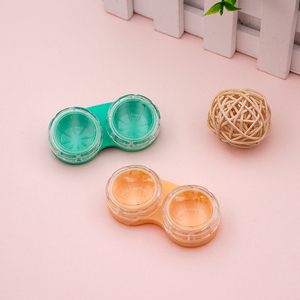
High Quality Durable Colorful Eco-Friendly Luxury Contact Lenses with Accessory Cases
View Product Details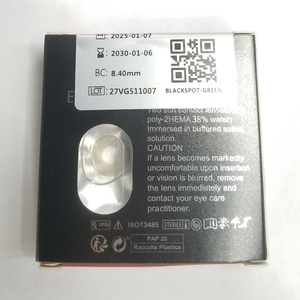
Eyeshare Wholesale Personal Brand Lentes De Contacto Paper Box Free Design Custom Eye Lens Packing Box Colored Contact Lenses
View Product Details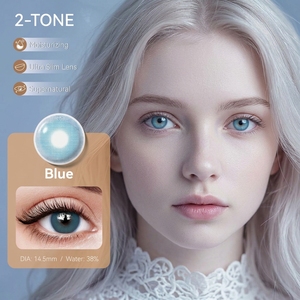
Fashion Style Natural Blue Soft Contact Lenses Cosmetic OEM ODM Wholesale 14.5mm 38% Water Content ISO 13485 Certified
View Product Details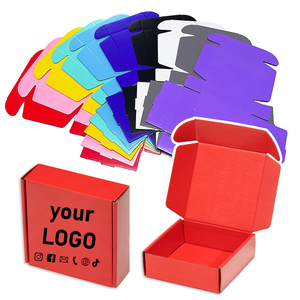
Bulk Colorful Paperboard Airplane Boxes Wholesale Super Hard Foldable Pink Gift Contact Lenses Packing Accessories
View Product Details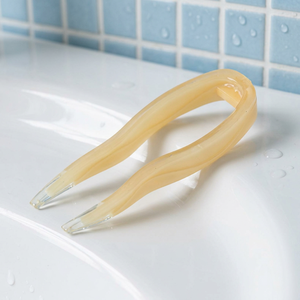
Inventory Wholesale Color Plastic Soft Contact Lens Small Clip Rubber Coating Companion Box Accessories Tweezers
View Product Details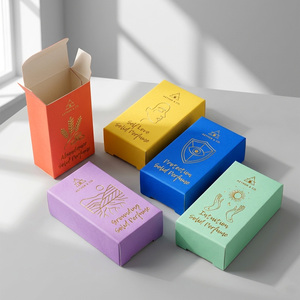
Custom Printed Own Your Logo Design Color Contact Lenses Gift Box Soap Cosmetic Contact Lenses Packaging Paper Boxes
View Product Details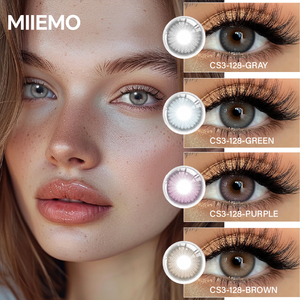
OEM ODM Custom Logo Colored Contact Lenses Private Label Beauty Eye Lenses
View Product Details
Industry Intelligence Report
State of Contact Lens Manufacturing in China: Procurement & Technical Standards
A comprehensive evaluation of China's top private label contact lens manufacturers, raw hydrogel polymer selection, micro-encapsulation sandwich printing, and international regulatory compliance.
The global color contact lens market is undergoing a seismic paradigm shift. What was once predominantly a niche corrective optical segment has expanded into a multi-billion-dollar beauty, fashion, and medical device crossover sector. Professional buyers—ranging from regional optical distributors and e-commerce beauty conglomerates to established ophthalmic retail chains—are increasingly turning to top China private label contact lens manufacturers to build resilient, high-margin product portfolios.
China's contact lens manufacturing ecosystem has evolved far beyond low-cost production. Today, modern Chinese OEM/ODM facilities operate fully automated cleanrooms certified under ISO 13485 medical device quality management systems, holding CE certifications under EU MDR 2017/745 and US FDA 510(k) clearances. By pairing European optical design research (such as Italian iris texture formulation) with precision Asian automated cast-molding engineering, top manufacturers provide global brands with unparalleled competitive advantages in Information Gain, product safety, and rapid market deployment.
35+
Signature Iris Pigment Shades
-13.00 to +6.00
Dioptre Power Coverage
ISO 13485
Medical Device Quality Standard
40+
Global Export Markets
Material & Optical Superiority
Polymer Engineering & Factory Capabilities
Comparing foundational hydrogel polymers, moisture retention matrices, and pigment isolation safety standards.
Advanced Hydrogel Polymers
Our OEM operations utilize high-purity hydrogel formulations including Polymacon (38% water content HEMA matrix engineered for structural durability and low deposit accumulation) and Hioxifilcon D (55% water content hydrogel delivering superior oxygen transmissibility DK/t and day-long corneal hydration).
Micro-Encapsulation Printing
To strictly comply with international biological safety protocols, pigments are never in contact with ocular tissue. Utilizing multi-layer Sandwich Printing Technology, biocompatible organic pigments are sealed between two inert hydrogel layers, guaranteeing zero dye leaching and smooth surface wettability.
1, 2 & 3-Tone Architectural Optics
From subtle 1-Tone translucent tints designed for light iris enhancement to sophisticated 3-Tone designs featuring a dark limbal outer ring, hyper-realistic main hue field, and warm honey inner accent, our optical patterns achieve natural color shift on dark brown eyes without flat opacity.
Technical Comparison: Hydrogel Polymer Matrix Specifications
| Polymer Material | Water Content | Oxygen Transmissibility (DK/t) | Base Curve (BC) | Diameter (DIA) | Recommended Replacement | Primary Application Target |
|---|---|---|---|---|---|---|
| Polymacon (HEMA) | 38% ± 2% | 8.5 x 10⁻¹¹ | 8.5mm / 8.6mm | 14.0mm - 14.5mm | Monthly / Quarterly | High-durability color cosmetic lines; dry climates |
| Hioxifilcon D | 55% ± 2% | 18.0 x 10⁻¹¹ | 8.6mm | 14.2mm - 14.5mm | Daily / Monthly | Sensitive eyes, extended wear comfort, high oxygen needs |
| Silicone Hydrogel (Gen-3) | 45% ± 2% | 100+ x 10⁻¹¹ | 8.6mm / 8.7mm | 14.2mm | Daily / Monthly | Premium optical lines, high-Dk medical grade correction |
Market Dynamics & Purchasing Intelligence
Future Procurement Trends in Private Label Contact Lenses
Key industry shifts shaping inventory strategy, consumer demand, and manufacturing technology over the next five years.
Trend 01
Surge in Specialty Rx: Positive Toric & Astigmatism Color Lenses
Historically, color contact lens buyers with astigmatism or severe hyperopia were excluded from fashion cosmetic ranges. Leading Chinese OEM factories now offer customized positive toric colored contact lenses and expanded sphere ranges (-13.00 to +6.00D), allowing brands to capture high-value presbyopic and astigmatic niche segments.
Trend 02
Shift Toward Short-Replacement Hyaluronic Acid Matrices
Global consumer preference is shifting rapidly from annual lenses to daily disposable and monthly replacement schedules. Manufacturers are integrating moisture-locking agents like Hyaluronate (HA) directly into the blister saline packing solution, ensuring instant initial comfort and reduced tear film evaporation.
Trend 03
Eco-Friendly Sustainable Packaging & Automated Blistering
Modern regulatory and retail channels demand reduced plastic waste. Forward-thinking suppliers provide recyclable paperboard airplane packaging boxes, eco-friendly accessory companion boxes, and optimized PP blister foils that minimize environmental footprint while preserving sterile barrier integrity.